A Tycoon feature on travel, belonging, and the people who make a place feel like home
There is a moment that happens to some foreigners who spend enough time in the Philippines. It usually doesn't happen when the airplane lands, when they first see the white beaches of Boracay, or when they find themselves surrounded by the extraordinary limestone landscapes of Palawan. Those are the moments that fill camera rolls and social media feeds, and understandably so. The Philippines can be astonishingly beautiful. But the moment I'm talking about is quieter, more personal, and almost impossible to photograph.
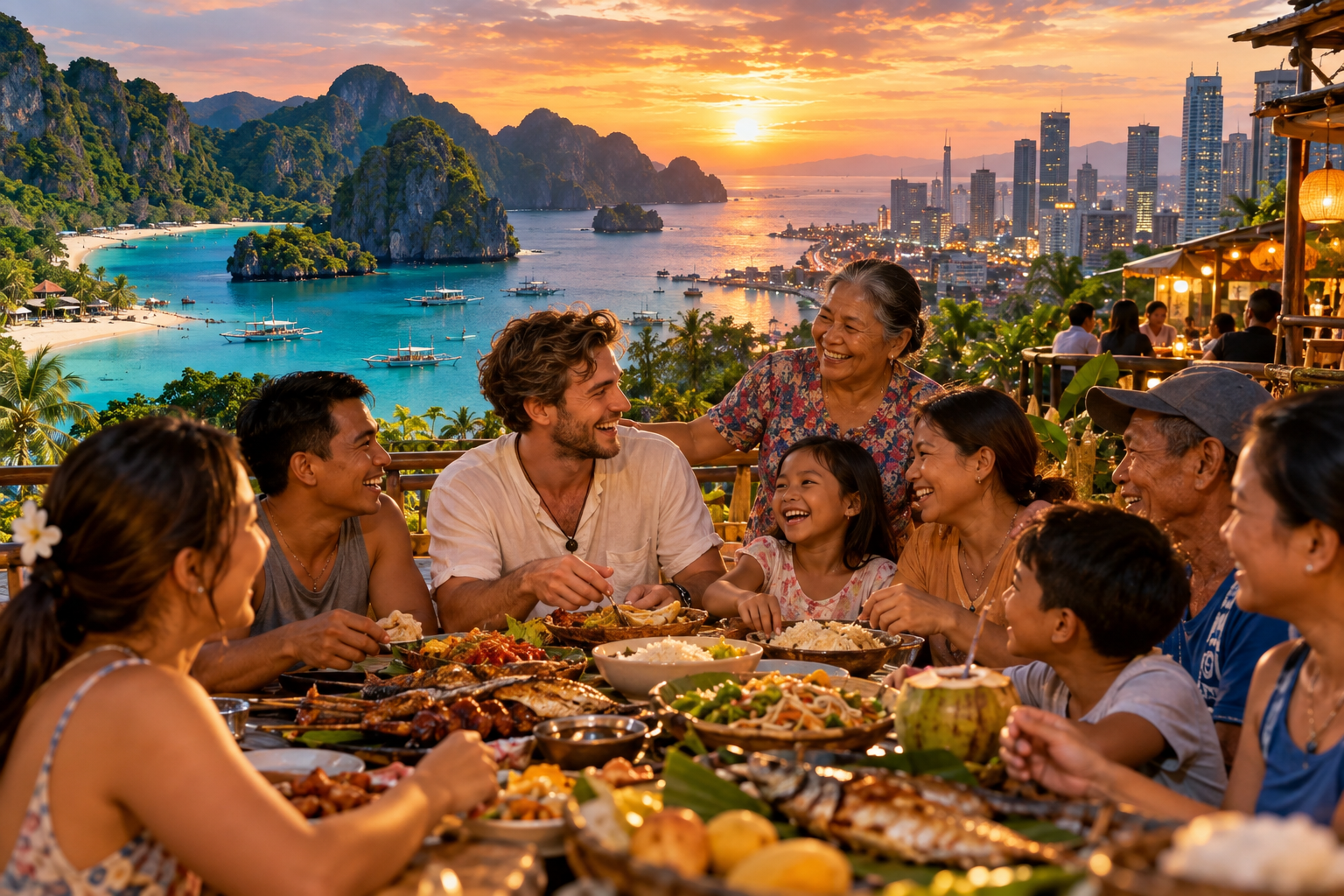
It might happen around a dinner table. Someone's mother has cooked far too much food, children are running around the house, somebody is telling a story everyone has heard before, and another person is trying to convince you to sing karaoke. You've already said you're full, but another serving somehow arrives on your plate anyway. You look around and realize that the people sitting beside you were strangers not so long ago. Now they're asking when you'll visit again.
That's when something changes. You came to see the Philippines. Somewhere along the way, however, you stopped simply being a tourist and started becoming part of people's lives. And perhaps that's the Philippine experience worth talking about.
The Photographs Only Tell You Half the Story
For someone who has never visited the Philippines, it's easy to understand the attraction. This is an archipelago of thousands of islands, with beaches, coral reefs, mountains, waterfalls, rice terraces, tropical forests and seas that sometimes look as though somebody has turned up the saturation.
There are places where you can wake up in a beautiful resort, walk a few steps and find the sea waiting outside. You can spend the morning island hopping, the afternoon swimming and the evening watching the sun disappear into the horizon. If comfort is important to you, you'll find everything from modest guesthouses and boutique hotels to sophisticated resorts and high-end accommodations where you can happily disappear from the world for a few days.
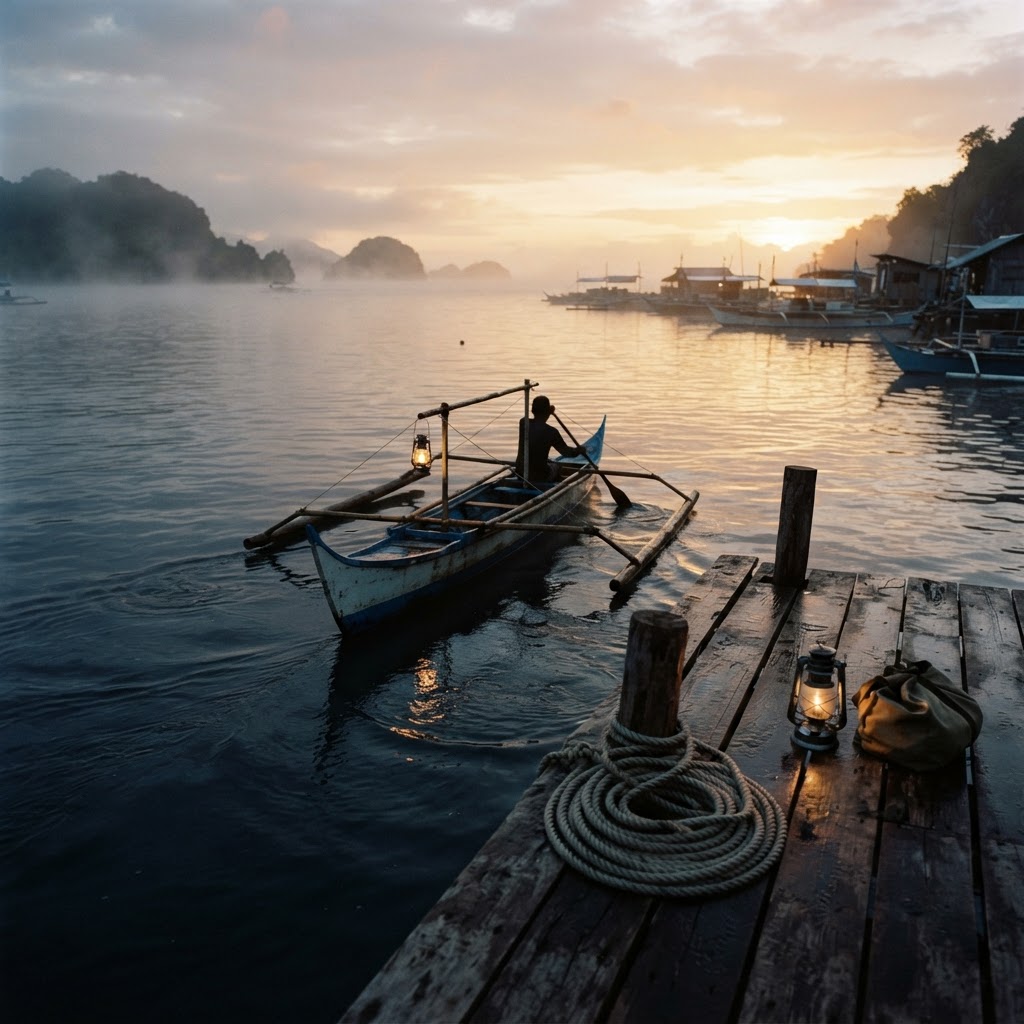
But beautiful scenery isn't particularly good at telling you what a country feels like. A photograph can show you the colour of the water in Palawan, but it can't introduce you to the boatman who tells you about growing up beside that water. It can show you a beach in Cebu, but it can't capture the conversation with the family who tells you where to find the food they actually eat. It can show you a Manila skyline at night, but it won't explain the lives unfolding beneath all those lights.
That part requires participation. Travel becomes more interesting when we stop treating destinations as backgrounds for photographs and start becoming curious about the people who call those destinations home. The Philippines rewards that curiosity.
Something worth remembering: Take the photographs, of course. Just don't spend so much time documenting where you are that you miss the people standing beside you.
There Isn't Just One Philippines
People sometimes imagine the Philippines as an endless succession of beaches, coconut trees and bamboo huts. Those things certainly exist, but arrive in Metro Manila and that picture quickly becomes more complicated.
Here you'll find glass towers, enormous shopping centres, luxury hotels, busy business districts, cafés filled with young professionals, rooftop bars, international restaurants and neighbourhoods that seem to stay awake long after you've decided you should probably go to bed. Makati and Bonifacio Global City can feel worlds away from the small islands featured in travel magazines, yet they are every bit as much a part of contemporary Philippine life.
Travel outside the capital and the personality changes again. Cebu mixes urban life with relatively easy access to island destinations. Iloilo has its own food, heritage and pace. Davao has another identity altogether. Smaller cities and provincial towns introduce you to regional languages, traditions and dishes that remind you how difficult it is to describe more than a hundred million people with one convenient stereotype.
The contrasts are part of what makes travelling here interesting. You might have dinner in an elegant restaurant one evening and eat at a neighbourhood carinderia the following afternoon. You might sleep in a luxurious hotel, then spend the next day somewhere so peaceful that the loudest thing you hear is the sea. Neither experience is more authentic simply because one is expensive and the other isn't. They are different windows into the same complicated, changing country.
Something worth remembering: Don't come searching only for the Philippines you've already seen online. Give the country an opportunity to surprise you.
If You Want to Understand Filipinos, Sit at the Table
Food tells stories that guidebooks sometimes struggle to explain. Walk into a carinderia and you'll usually find prepared dishes waiting behind a counter or glass display. Point at whatever looks interesting. Ask what it is. Try something unfamiliar. At another time, go to a good Filipino restaurant and see how chefs reinterpret the same flavours with entirely different ingredients, techniques and presentation. There is room here for street food, fast food, family restaurants, cafés, hotel buffets and serious fine dining.
But the most memorable meal might not come from a restaurant at all. It might happen inside someone's home.
Food and hospitality often overlap in Filipino life. Visitors quickly become familiar with being asked whether they've eaten, being encouraged to try another dish, or discovering that saying "I'm full" is apparently considered the opening position in a negotiation.
The late Anthony Bourdain noticed this during his time in the country. "Filipinos love feeding people," he observed, and the sentence captures something larger than appetite. Feeding another person can be an expression of welcome, affection and care. The meal is important, but so is the act of sharing it.
Sit at the table long enough and the conversation starts travelling. Someone tells you where they grew up. Somebody talks about a relative working overseas. An uncle has a joke. A grandmother wants you to eat more. Before you know it, you're learning about the Philippines without anybody giving you a history lesson. That is one of the wonderful things about food: sometimes a country explains itself between mouthfuls.
Something worth remembering: Try the celebrated restaurants, but don't overlook ordinary meals. Ask Filipinos what they like to eat and where they like to eat it. You may discover that the story behind your meal matters as much as the meal itself.
Don't Just Meet Filipinos. Get to Know Them.
There is a considerable difference between meeting people and knowing them. Tourism naturally creates thousands of brief encounters. You meet the receptionist who checks you into your hotel, the driver who takes you across town, the server who brings dinner, the guide who takes you island hopping and the person behind the counter who helps you buy something. Everyone plays a small role in your journey, and then you continue to the next destination.
But what if you occasionally slow down? Ask someone where they're from. Ask your driver about his hometown. Talk to the people beside you rather than automatically reaching for your phone. Learn a few words in Filipino or, when travelling around the country, ask about the local language. Listen when somebody tells you about their family.
None of this should be treated as a strategy for obtaining an "authentic experience." People are not tourist attractions, and friendship should never become another item on an itinerary. Filipinos are also enormously diverse, so visitors should be wary of romantic stereotypes suggesting that every person they encounter will behave in precisely the same way.
Still, family occupies an important place in Filipino society, and one of the more beautiful things visitors may notice is that the idea of family doesn't always stop with blood relations. Close friends can become kuya, ate, tito or tita. People are absorbed into circles of affection and responsibility. Someone who began as a stranger can, over time, find themselves included in birthdays, Sunday lunches, Christmas gatherings and ordinary afternoons when absolutely nothing remarkable is happening. Those ordinary afternoons may become the memories you treasure most.
Something worth remembering: Don't try to manufacture closeness. Be interested, respectful and generous with your own time. The best human connections usually happen when nobody is trying to turn them into an experience.
The Day You're No Longer Treated Like a Visitor
Perhaps this is where the Philippines becomes difficult to put into words. Imagine you've been invited to someone's home several times. At first, you're the guest. Everyone makes sure you're comfortable. They ask what you'd like to eat and whether you need anything. There's a little ceremony around your presence because somebody new has arrived.
Then, slowly, the ceremony disappears. One day nobody asks what you'd like to drink because you already know where the glasses are. Someone tells you to get something from the kitchen yourself. The children barely look up when you arrive because seeing you is no longer unusual. You are teased, included in jokes and expected to help carry something to the table.
It sounds like you've become less important. Actually, something much better has happened. You've become familiar.
There is a particular warmth in reaching the point where people no longer feel they have to entertain you. You are simply allowed to be there. You are present for ordinary conversations, minor family disagreements, jokes that make no sense outside the family and long afternoons where nothing particularly exciting happens. Travel rarely advertises those moments because there's nothing spectacular to photograph. Yet belonging has never needed a dramatic backdrop.
Anthony Bourdain wrote movingly about the Filipino family that became intertwined with his own, describing families celebrating holidays, birthdays and vacations together and moving naturally in and out of one another's homes. What makes that story powerful isn't simply that the family was Filipino. It's the recognition that human beings can build family in unexpected places. Maybe that's something we all understand, regardless of nationality. We want places where our presence matters.
Something worth remembering: If people eventually become comfortable enough to stop treating you like a special guest, don't be disappointed. You may have received something far more valuable.
Then Comes the Hardest Part: Going Home
Eventually, the suitcase comes out again. It's funny how different it looks from the first time you packed it. Before the trip, that suitcase represented anticipation. Now you're trying to squeeze clothes, souvenirs and perhaps several packages of dried mangoes into it while wondering how the weeks disappeared so quickly.
Your phone is full of photographs. There are beaches, boats, sunsets, hotel rooms, plates of food and city skylines. You probably have enough material to remind yourself for years that the Philippines is beautiful. Yet those might not be the things making it difficult to leave.
Instead, you think about the messages asking whether you've reached the airport safely. Someone tells you to come back. Somebody's mother reminds you to eat properly. Your friends joke that next time you need to stay longer. Perhaps someone has already begun making plans for what you'll do when you return.
That's when you understand something travel advertising can never quite communicate. Beautiful places impress us. People attach us to them.
Once you've formed relationships, geography changes. Manila is no longer simply Manila; it's where somebody you care about lives. Cebu isn't just another island destination; it's where you remember laughing around a table. A provincial town nobody back home has heard of can suddenly matter enormously because there is someone there who would be happy to see you again. The map hasn't changed. Your relationship with it has.
Something worth remembering: Exchange details with the people who genuinely become your friends, and stay in touch after you leave. A friendship doesn't have to end simply because a holiday does.
Perhaps This Is What Travel Was Always Supposed to Give Us
We usually begin travelling because we want to see something different. Different landscapes, different food, different customs, different languages and different ways of living. We cross oceans because curiosity tells us there must be more to the world than the small piece of it we already know.
Then, if we're fortunate, travelling teaches us something unexpected. After all the differences, we begin noticing the similarities.
Parents worry about their children. People miss relatives who live far away. Families argue, forgive one another, celebrate birthdays, tell embarrassing stories, cook too much food and worry whether everybody has eaten. People want meaningful work, a safe home, good health, laughter, friendship and a future they can look forward to. You can travel thousands of kilometres only to discover these familiar things around somebody else's table.
Maybe that's why certain journeys remain with us. The Philippines has extraordinary beaches, beautiful islands, energetic cities, wonderful food, comfortable hotels and luxurious resorts. Those things matter. They make travelling enjoyable, and they give people plenty of reasons to come. But they aren't necessarily the reason someone falls in love with a country.
Sometimes that happens because a stranger remembered your name. Because somebody invited you home. Because a family made space at the table. Because people who owed you nothing gave you their time. And because somewhere along the journey, a place that was supposed to be foreign stopped feeling quite so foreign.
So when you eventually visit the Philippines, see the famous places. Swim in the clear water. Stay somewhere beautiful. Explore the cities. Eat at the excellent restaurants and try the little carinderia around the corner. Travel beyond the places everybody already knows. But don't rush from attraction to attraction as though the purpose of travel is to finish a checklist.
Slow down occasionally. Have the conversation. Accept the invitation when it feels right. Sit at the table. Listen to the stories. And allow yourself to become more than someone passing through.
Because years later, you may struggle to remember the name of the hotel where you stayed or which beach had the clearest water. You may forget what you ordered at that expensive restaurant and exactly how many islands you visited. But you probably won't forget the people who made room for you.
And if someday you find yourself returning to the Philippines, perhaps you'll realize that you're no longer coming back simply because you miss the beaches. You're coming back because somewhere on these islands, there are people you're looking forward to seeing again.
And isn't that one of the most beautiful things travel can give us? A place far from home where someone is waiting for you to come back.
For those who are curious about the places, food, communities and stories that make up this country, VisitThePhilippines.net can be a starting point. But like every worthwhile journey, the best parts are often the ones no website—or itinerary—could ever plan for you.