A reflection for every Filipino who is tired of choosing between surviving and thriving
Let me ask you something honest. When was the last time you felt the government worked for you?
Not the politician who smiled at you during a campaign. Not the tarpaulin with the face of someone running for their third consecutive term. Not the ayuda that came just before election season and disappeared the week after.
I mean genuinely, structurally, consistently — when did you feel that the system had your back?
If you're like most Filipinos I know — the ones who wake up early, pay their taxes, register their businesses, follow the rules, and still wonder at the end of every month where all the money went — you probably can't remember. Or maybe you never have.
I run a small business in this country. I've been doing it for over a decade. And I want to talk about something that I think every Filipino needs to sit with, even if it's uncomfortable. Especially because it's uncomfortable.
Who is really to blame for what's happening to our economy?
Not the easy answer. Not "the corrupt politicians" — though they're part of it. Not just "the system" — though it's broken in places. I mean the full, honest, look-in-the-mirror answer.
Because if we keep pointing fingers without ever looking at our own hands, nothing changes. And I think we're all tired of nothing changing.
The Poor as Political Capital
Let's start with the hardest truth: the poor are not a problem to be solved in this country. They are a resource to be managed.
I don't say that to be cruel. I say it because the pattern is unmistakable.
Consider how the cycle works:
- The poor don't pay income tax — not because they're cheating the system, but because they don't earn enough to qualify.
- They are the primary beneficiaries of financial aid programs — 4Ps, ayuda, dole-outs, cash assistance distributed with the face of a congressman or mayor printed on the envelope.
- These programs are framed as charity. They are not. They are leashes dressed as lifelines.
Think about it. If you genuinely wanted to lift people out of poverty, would you keep them dependent on handouts? Would you design a system where the only way to eat next month is to stay poor enough to qualify? Would you make sure the help arrives in small, visible, politically attributable amounts — never enough to build independence, always enough to build gratitude?
This isn't a criticism of the poor. The poor are not lazy. The poor are some of the hardest-working people I have ever met — the tricycle drivers, the market vendors, the OFWs, the mothers running sari-sari stores at 4 AM. They are surviving a system that was never designed to let them escape.
It's a criticism of a political structure that needs the poor to stay poor. Because the moment the poor become self-sufficient, they stop needing the politician. And a Filipino who doesn't need the politician is the most dangerous person in this country.
Ask yourself: how many of our leaders have built their entire political brand on being "pro-poor"? And after decades of being pro-poor, how many poor people have actually stopped being poor?
The numbers tell the story. The rhetoric fills the rallies. The reality fills the slums.
The Corrupt Officials — and the System That Feeds Them
Now let's talk about the ones who steal. Let's be clear about what corruption actually costs us — not in abstract billions, but in the concrete things that never get built.
Every peso stolen from a public budget is:
- A classroom that doesn't get built, so 60 children share a room meant for 30.
- A road that doesn't get paved, so farmers can't get their produce to market before it rots.
- A hospital that doesn't get equipped, so a mother in labor waits four hours for a bed.
- A scholarship that doesn't get funded, so a gifted student ends up working in a call center instead of becoming an engineer.
We all know the patterns. The padded budgets. The overpriced infrastructure projects. The commissions, the kickbacks, the "standard operating procedures" that everyone whispers about but no one documents. The friends who suddenly win every government contract. The relatives appointed to positions that didn't exist before the appointment.
I'm not going to name names — not because I'm afraid, but because naming one or two individuals lets the system off the hook. The problem isn't one corrupt official. The problem is a system where corruption is incentivized, protected, and inherited.
A corrupt official who gets caught becomes the scapegoat. The system that produced them, trained them, rewarded them, and protected them stays untouched. We sack one person and call it justice. Meanwhile, the next person in line has already learned the same lessons — just more carefully.
The question isn't just "who stole?" The question is: why does our system keep producing people who steal? And why do we keep electing them?
The Forgotten Middle Class and the SMEs Who Carry the Weight
This is where it gets personal for me. And if you're reading this and you run a small business, or you work hard in a modest job, pay your taxes, and wonder why you're always struggling despite doing everything right — this is for you.
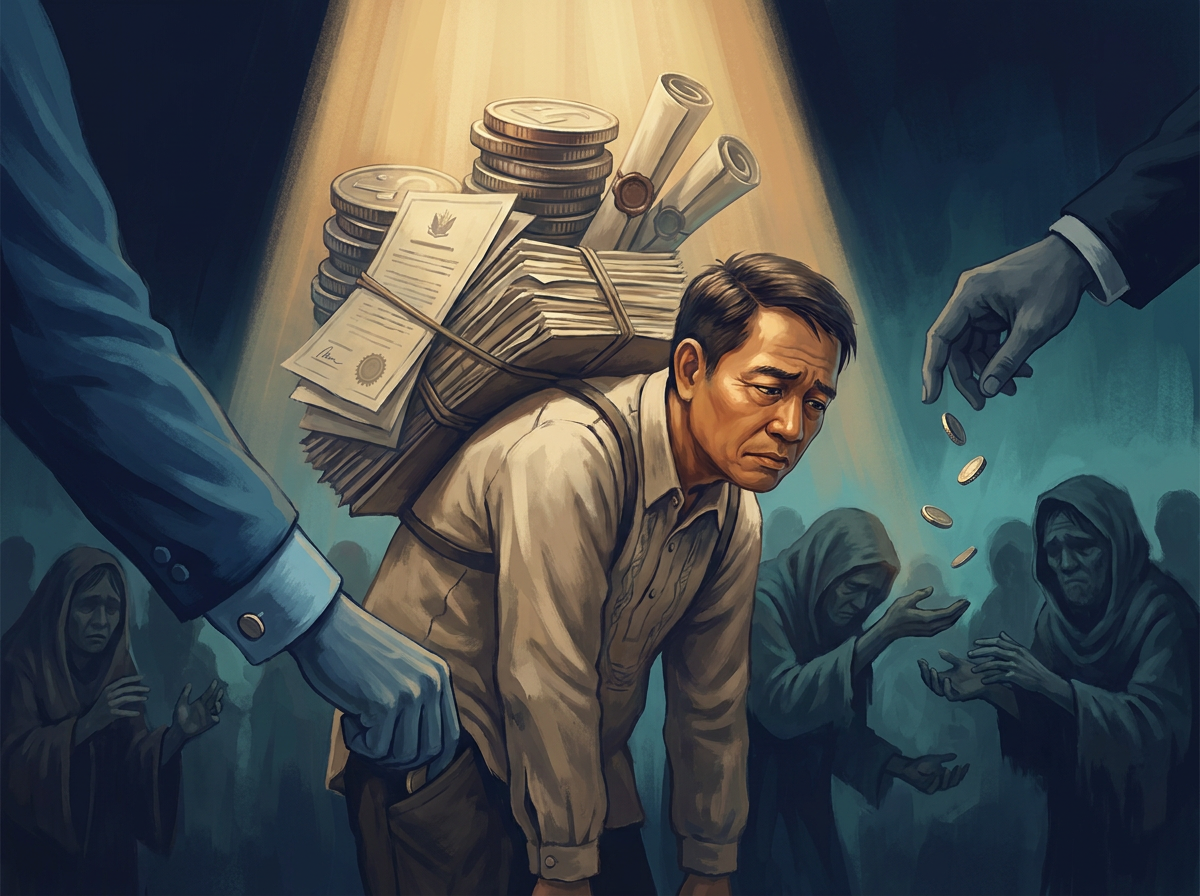
The middle class and the SMEs are the backbone of this economy. And we are the ones the government treats worst.
Here's the irony that keeps me up at night:
- We pay our taxes. Honestly. Reluctantly, sometimes, but honestly. Because we know what happens if we don't.
- We follow the rules. We register our businesses. We get the permits. We submit the reports. We comply with BIR, DTI, SEC, LGU, and every other acronym that lands on our desk.
- We are the first target of harassment. When the BIR needs to hit a collection target, they don't go after the billionaire who parked wealth offshore. They audit the small agency with 12 employees. They send the letter to the start-up that just filed its first annual return. They knock on the door of the entrepreneur who is already drowning in compliance costs.
- We carry the economy on our backs. SMEs account for the vast majority of businesses and employment in this country. We are not the exception. We are the engine.
- And we are not taken care of. No subsidies. No relief packages designed for us. No safety net when a bad month hits. We're too rich for ayuda and too poor to be comfortable. We fall through every crack in every program.
The government treats us like this: pay up, shut up, and be grateful you're not poorer.
Meanwhile, the wealthy — the truly big fish, the ones whose tax structures make auditors weep — they have lawyers, connections, and the ability to make problems disappear. The poor have the politicians' attention because they have the votes. And us in the middle? We have the privilege of working harder every year to stay in exactly the same place.
I'm not asking for pity. I'm asking for fairness. I'm asking: why does the government chase the people who fund it and ignore the people who need it?
When a small business owner in Meycauayan has to close shop because the cost of compliance exceeded the cost of inventory, that's not just a personal failure. That's a system failing the person it should be protecting.
When a start-up spends more time on paperwork than on product, that's not red tape. That's a wall designed to keep the small players small.
And when the middle class shrinks because people give up — because they realize that following the rules gets you penalized while breaking them gets you elected — that's not an economic statistic. That's a nation eating its own future.
The Voter's Complicity — Look in the Mirror
Now here's where it gets real. Because I could write about corrupt officials all day and most of you would nod along. But this part is harder to hear.
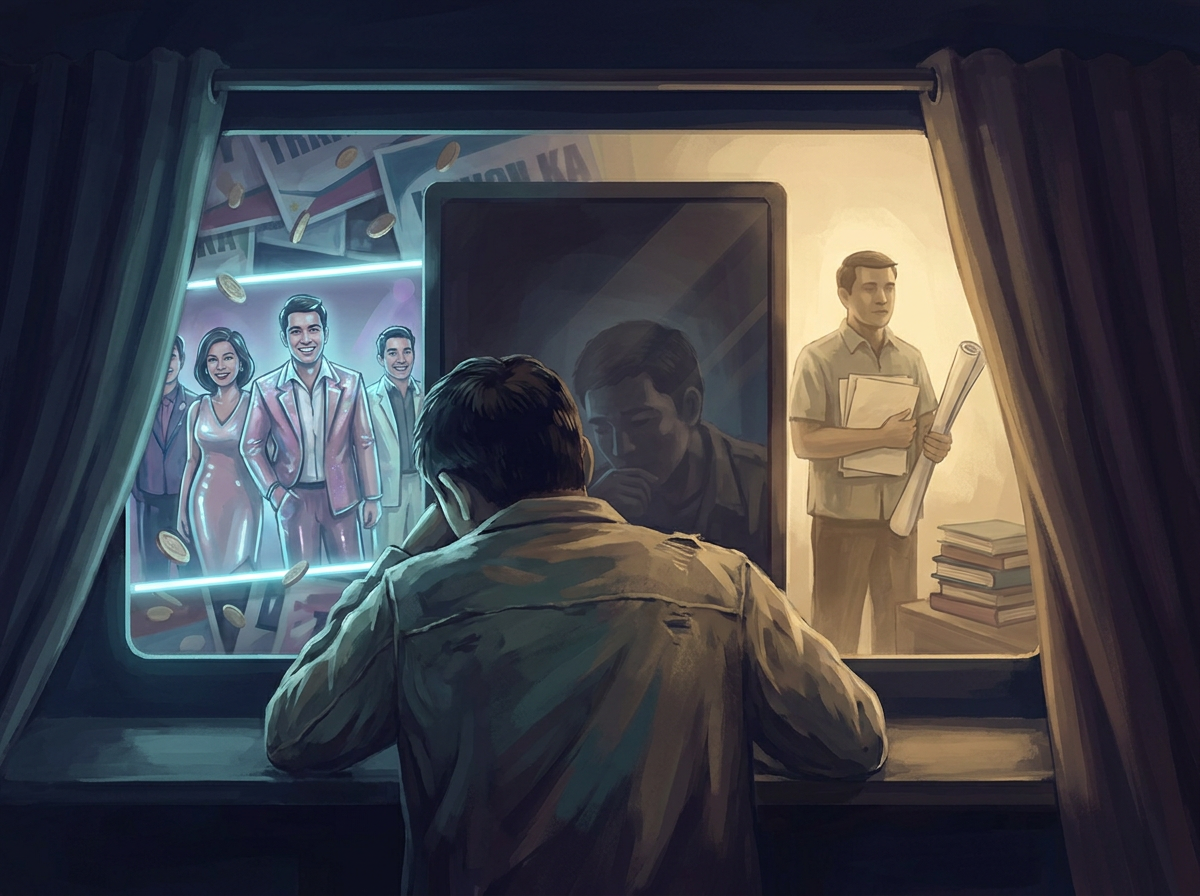
We are also to blame.
Not "we" in the abstract. You. Me. Us. Every Filipino who has ever walked into a voting booth and chosen a name they recognized over a name they should have researched.
Let me list the types of candidates we keep electing:
- The actor or actress whose entire political qualification is that they were on television for 20 years. What have they run? A production schedule. What do they know about fiscal policy? Nothing. What do they know about infrastructure planning? Nothing. But they have name recall, so they win.
- The son, daughter, or wife of a politician who inherited the seat like it was family land. What have they built on their own? Often, nothing. The surname did the work. The dynasty did the rest.
- The TV personality or viral figure who became famous for entertainment and decided that qualified them to govern. Would you let a comedian perform your surgery? Would you let a basketball coach audit your taxes? Then why do you let them write the laws that govern your life?
- The vote-buyer who hands you a few hundred pesos, a tarpaulin, a sack of rice, a promise — and you take it, because times are hard and the money is real even if the sincerity isn't.
I understand why people sell their votes. I'm not here to judge the mother who takes P500 because her children haven't eaten properly in three days. That's not the failure I'm talking about.
The failure is this: we sell our votes, and then we complain about the result. We elect celebrities and then act surprised when they can't manage a budget. We vote for dynasties and then wonder why nothing changes. We choose faces over competence and then rage when the face turns out to be empty.
The government we have is the government we chose. Not the government we deserved — the government we chose. There is a difference, and sitting with that difference is the first step toward changing it.
Ask yourself honestly: in the last election, did you vote for the most qualified candidate, or the most familiar one? Did you research their track record, or did you just recognize the name? Did you ask what they had actually built, or did you just like their slogan?
Every vote for incompetence is a vote against your own future. And we have cast a lot of those votes.
What Do We Do Now? — A Call to Realization
I'm not writing this to make you feel hopeless. I'm writing this to make you feel responsible. Because responsibility is the only thing that leads to change.
Here's what I'm asking every Filipino to do — not in some far-off election, but starting now, in every decision you make about who leads you:
Demand experience. Before you vote for someone, ask: What have they actually run? Have they managed a budget? Have they led an organization through a crisis? Have they built something that lasted? Governance is not a rehearsal. It's not a place to learn on the job. We cannot afford to keep electing amateurs and hoping they figure it out.
Demand educational background. This doesn't mean everyone needs a PhD. It means: does this person have the knowledge foundation to understand what they're governing? Would you hire an engineer who never studied engineering? Then why elect a lawmaker who never studied law, economics, or public administration?
Demand values. What does this person stand for when the cameras are off? What have they said when it was unpopular to say it? What have they refused to do even when it would have benefited them? Values are not what someone puts on a campaign poster. Values are what someone does when no one is watching.
Demand morals. Has this person been accountable? Have they been honest about their finances, their decisions, their failures? Have they explained where the money went? Have they shown up when it was hard, not just when it was convenient? Morals are not about being perfect. They're about being accountable — and accountability is the one thing our political culture has never normalized.
And above all: stop voting for faces. Start voting for competence and character.
The trapo, the celebrity, the dynasty, the viral star — they rely on one thing and one thing only: that you will choose them without thinking. That you will see the familiar name and stop there. That you will never ask the hard questions because the easy answers feel safer.
Every time you vote without thinking, you hand them your future. Every time you choose fame over qualification, you choose the economy you deserve. And every time you sell your vote for a few hundred pesos, you sell your children's country for the price of a single meal.
Is that what we want? Is that the Philippines we're leaving behind?
A Final Thought
I love this country. I say that without irony, without performance, without the usual political theater. I love the Philippines the way you love a family member who keeps making the same mistakes — with frustration, with heartbreak, but with an unshakable belief that they can be better.
I run a small business here. I employ people here. I pay taxes here. I have watched this country survive a pandemic, typhoons, political upheavals, and economic crises that would have broken nations with less resilience. Filipinos are not weak. We are not lazy. We are not unintelligent.
We are underserved. We are misgoverned. And too often, we are complicit in our own misgovernance.
But that can change. Not because the politicians will suddenly become honest. Not because the system will fix itself. It will change because we decide it changes. Because we walk into the voting booth and, for the first time in a long time, choose the person who is qualified over the person who is famous. The person with a track record over the person with a surname. The person who has earned it over the person who has inherited it.
That is not a radical idea. That is the bare minimum of citizenship.
And if we can't even do that — if we can't even be bothered to think about who we're handing our country to — then the question isn't who is to blame for the Philippine economy.
The answer is all of us. And the solution has to be too.
This is not about hating the Philippines. It's about loving it enough to demand better — from our leaders, from our systems, and from ourselves.
Building dreams. Making families stronger. But first, making the choice that makes both possible.