Last night, I climbed into bed like an old man.
That probably sounds like a small thing. But if you have ever watched someone you love move through pain they refuse to name — if you have ever sat beside someone and laughed at how slowly they moved, not understanding what it cost them — then you will know exactly why I lay there in the dark and wept.
It started without warning. An ache in my back. Then my joints. Then a heaviness that spread through my muscles like I had carried something too heavy for too long and finally set it down. Arthritis. My body — the same body that has stayed up until two in the morning drafting proposals, stood in front of rooms full of people, chased dreams through every version of difficulty this country could throw at a small business owner — was telling me, plainly and without apology: you are not young anymore.
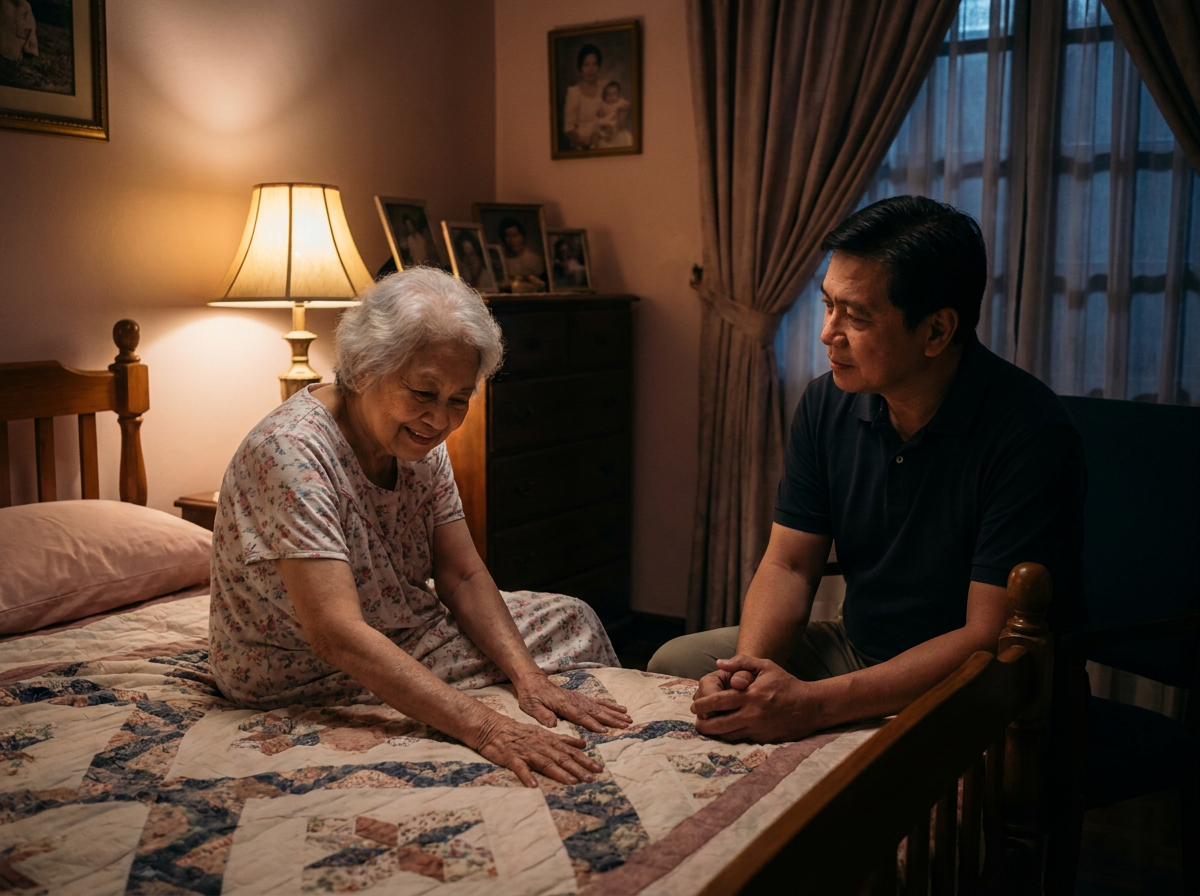
Getting into bed was a production. I had to plan it. Lower one side, shift my weight, fix the pillow with slow deliberate care because one sudden movement sent a sharp announcement through my spine. And in that moment — slow, careful, helpless, lying in the dark — I laughed. Not because it was funny.
Because I had seen this before.
Five years ago, my mother was still alive.
Every night, I would tuck her in. I was her son, her protector, the one who hovered and worried and checked — she used to tease me about how paranoid I was about her health. And she would climb into bed the same way I climbed in last night. Slowly. Carefully. In what I used to call, right in front of her face, slow motion.
I would laugh. I would joke about it. "Mama, why are you moving like a sloth?" And she would smile — that patient, knowing smile she always had — and say nothing.
She never told me it hurt.
She never once said, Angelo, I am in pain. She never let me see the full weight of what her body was carrying. I know now, lying in my own ache, exactly why. She knew me. She knew that if she told me the truth, I would panic. I would hover worse than ever. I would make her condition the center of every moment, and she would spend her remaining days managing my worry instead of living her own peace.
So she protected me. From the truth. From my own love turned into suffocation.
She never wanted to be a burden. She would say that often. I don't want to be a burden, Angelo. And I would always say the same thing back: You are never a burden. You are never, ever a burden to me.
But I don't think I fully meant it the way I should have — not because I didn't love her, but because I didn't understand what it truly meant to be cared for. I had always been the one being cared for. She raised me. She carried me. I did not know, not really, what it felt like to carry someone else through pain I could not fix, and to do it with a smile so they would not worry.
Last night, I finally understood.
I wish — God, I wish — I could go back. I would not laugh at the slow motion. I would not stand there watching her climb into bed and make it a joke. I would sit beside her, quietly, and just be there. I would not try to fix it or name it or make it smaller. I would just let her know that I saw her, and that she was seen, and that being there beside her was not a burden to me. It was a privilege. It was the most important thing I could do with my time.
She passed more than five years ago. And I still miss her every day. Some mornings I reach for the phone to call her before I remember.
Last night, pain moved through my body like a tide, and for the first time in five years, I felt close to her.
I am turning fifty-one this November.
That used to feel like a number. Now it feels like a compass.
At fifty-one, I am not as young as I once was, but I am not done — not even close. And I have been thinking about what these years are actually for. What they are supposed to count toward. Because time is no longer abstract to me. It is present. It is a body that reminds you of its limits. It is a mother who is no longer here. It is a company, a team, a community of people who need what you have to give — and a clock that will not wait for you to figure out your purpose.
I have been building OneNetworx for fifteen years. Through a death, a pandemic, a pivot, a rebuild. Through loans and sleepless nights and the quiet terror of not knowing if we would survive another month. We survived. We grew. We are still here.
And I have been asking myself, more honestly than ever before: why?
Not why in a discouraged way. Why in the deepest sense. Why do I get up and do this? Why does it matter that we help Filipino families find the right insurance? Why does it matter that we create pathways for aspiring entrepreneurs who have talent but no infrastructure? Why does it matter that every person who walks into our orbit — as a client, as an agent, as an employee — leaves with more options than they came with?
It matters because this is not a business. It is a ministry.
I do not say that lightly. I say it because I have watched my mother live it. She was an educator. She never thought of a student as a transaction. She thought of every person in front of her as someone with a future that needed tending. She gave of herself to people who could not always give back. She left behind not a building or a portfolio but a generation of people who carry something she poured into them.
That is what I am trying to build.
Every family we help protect — a young couple who finally has coverage, a mother who knows her children will be provided for if something happens to her, a micro-entrepreneur who built something real from nothing with our support — that is not a sale. That is a moment of security in a world that gives ordinary Filipinos very little of it. That is me serving God through the people He has placed in front of me.
I believe this now more than ever: my calling is not separate from my work. They are the same thing. Every person I employ is a person I am responsible to. Every partner I empower is someone whose dream I am helping carry. This company is not a means to an end. It is the end — the living, daily expression of everything I believe about service, and dignity, and what we owe each other.
Aging is a gift that not everyone receives.
I am holding that truth carefully this season. My body is slowing down. My joints are speaking a language they never spoke before. And instead of fighting it, I am trying to listen — because the last time someone I loved was moving in slow motion, I did not listen closely enough.
I will not waste this decade. I will not wait until I have the perfect plan, the perfect team, the perfect moment. I will do the work now, with the body I have, in the company of the people God has given me, toward something that will outlast me.
That is what my mother did. She did not wait for ideal conditions. She showed up, she gave, she protected the people she loved even when it cost her. And she did it without complaint, and without fanfare, and with a smile that I mistook for ease when it was actually courage.
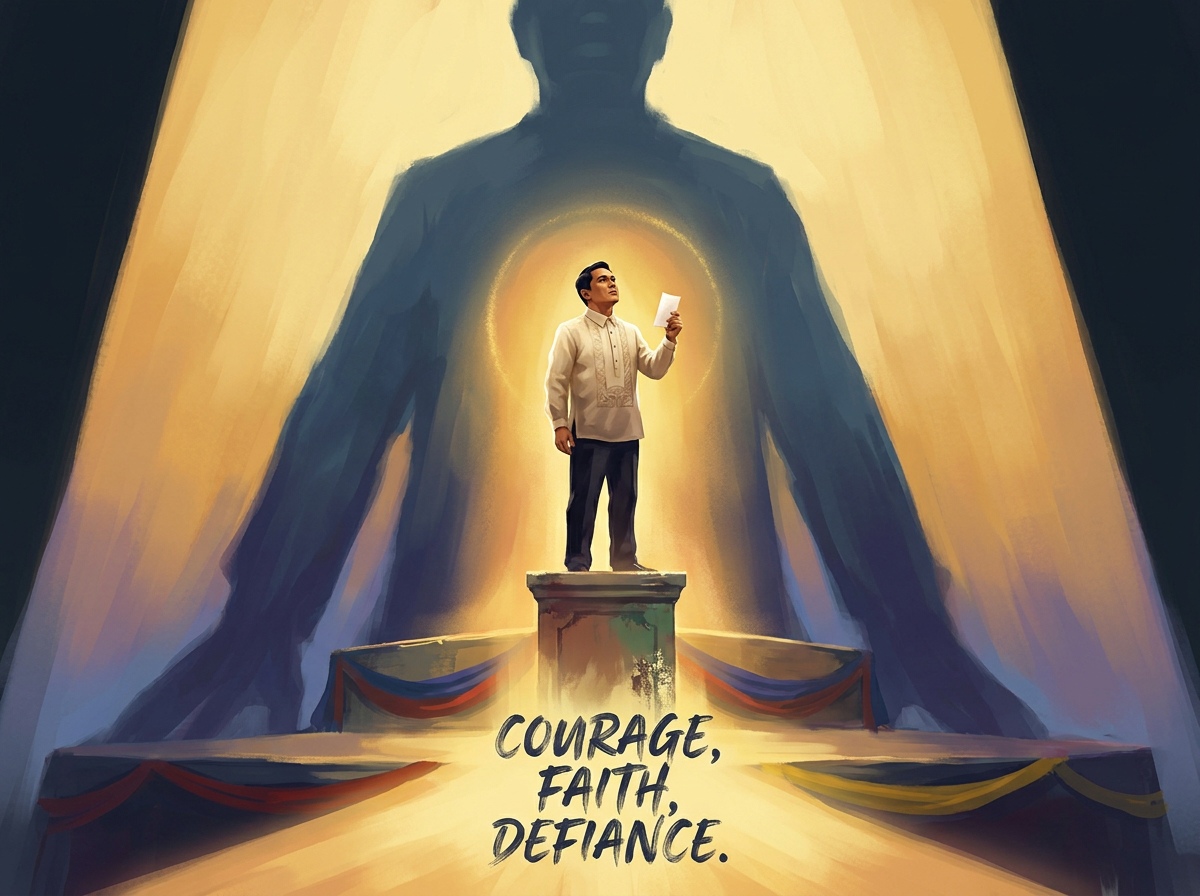
I carry that torch now. It is heavier than I expected. But I am grateful for the weight.
To every person reading this who is also in the middle of something hard — a business that is not yet what you dreamed, a body that is not cooperating, a loss you are still learning to carry — I want to say what I wish someone had said to me sooner:
The slow motion is not weakness. It is wisdom. It is the body learning what the heart already knows — that the most important things take time, and care, and the willingness to keep going even when it hurts.
Fifty-one years. And I am just getting started.
For my mother — I finally understand. And I am sorry I laughed. And I am grateful, every day, that I got to be your son.