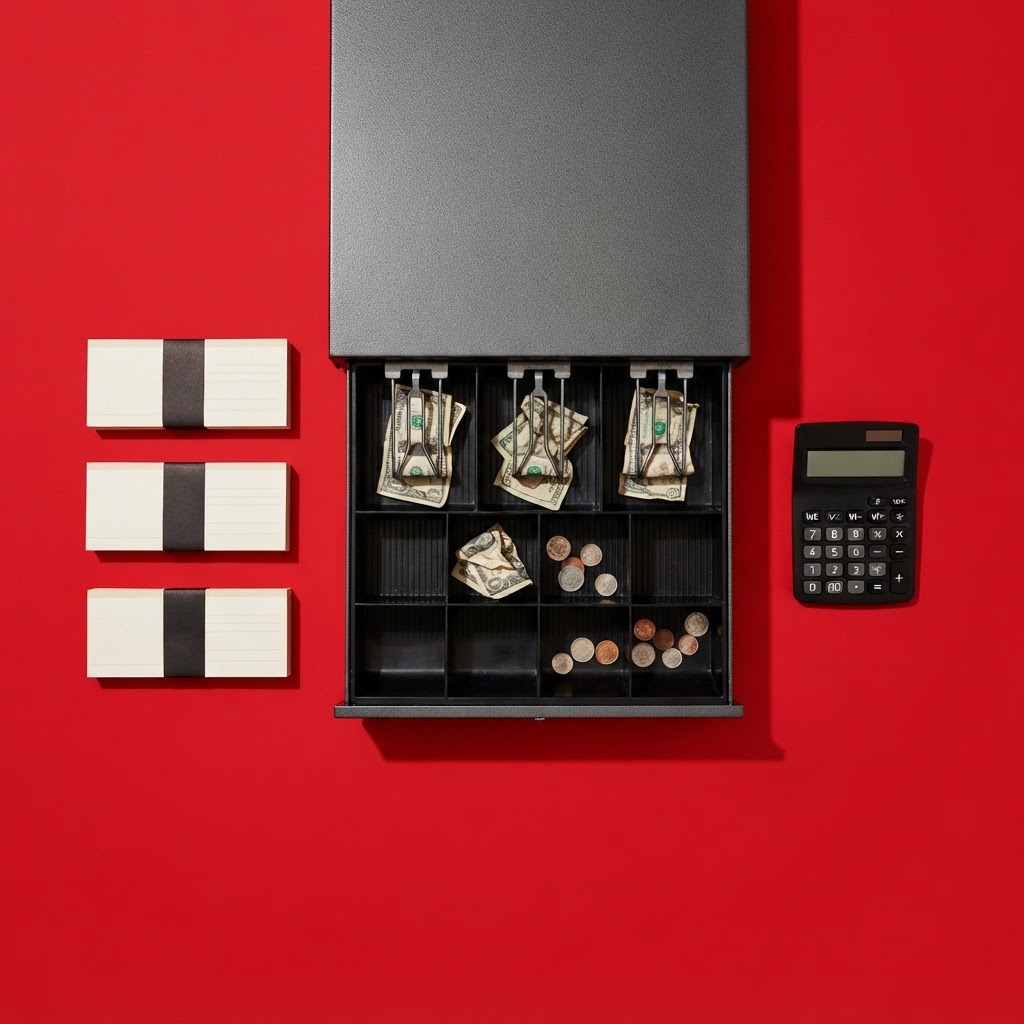
Every year, business owners are surprised by the same uncomfortable fact: the numbers say they made money, yet there's nothing left in the account when payroll or rent comes due. It isn't fraud, and it isn't bad luck. It's a structural misunderstanding of what profit actually measures — and what running a business actually requires.
Profit is an accounting concept. Cash is a survival concept. A business can be profitable and still die, simply because the money it earned hasn't arrived yet, or has already been spent on something the profit-and-loss statement doesn't show. For Filipino entrepreneurs — many of whom manage inventory, extend credit to customers, and operate in seasonal industries like tourism, retail, or food service — this gap between profit and cash is one of the most common reasons a seemingly healthy business suddenly can't cover its obligations.
The Difference Between Profit and Cash
Profit is calculated by subtracting expenses from revenue over a period of time — a month, a quarter, a year. But revenue isn't the same as money in the bank. If a business sells on credit terms, that revenue is recorded the moment the sale happens, not when the customer actually pays. A business can report a strong month and still have zero cash to show for it, because the income exists only as a promise from a client who hasn't settled the invoice.
Cash flow, by contrast, only cares about timing. It asks a simpler question: how much money physically moved in, and how much moved out, during this period? A business can be unprofitable in a given month and still have plenty of cash sitting in the account from a previous large payment. The two measures tell different stories, and owners who only look at one of them are flying with half the instrument panel.
This distinction matters most at the exact moments a business feels most successful — when sales are growing, when a big contract lands, when demand outpaces what the owner expected. Growth is usually what triggers a cash crisis, not decline.
Where Cash Gets Trapped
Money that has technically been earned but isn't yet usable is called trapped cash, and it accumulates in a few predictable places.
- Receivables. Every invoice sent but not yet paid is cash sitting in someone else's account, not yours. The longer the payment terms, the longer your own money is effectively lent out for free.
- Inventory. Stock on a shelf is cash that has been converted into product and hasn't converted back yet. A retailer who overbuys ahead of a busy season may look well-stocked and still be cash-poor, because the money is locked in boxes rather than in the bank.
- Prepaid obligations. Rent, insurance, subscriptions, and supplier deposits paid in advance reduce available cash immediately, even though the benefit is spread out over months.
- Owner withdrawals. In many small and family-run businesses, the line between business cash and personal cash is blurry. Draws taken during a good month can leave the business short when a slower month follows.
None of these are mistakes on their own. Extending credit to customers, holding inventory, and paying for insurance in advance are normal parts of running a business. The problem arises when an owner doesn't track how much cash is tied up this way, and therefore has no early warning before it becomes a shortage.
The Hidden Cost of Growth
Growth consumes cash before it produces it. A business that wins a larger client, opens a second location, or takes on more seasonal volume usually has to spend money first — on inventory, staff, deposits, or equipment — well before the new revenue starts arriving reliably.
This is especially visible in businesses tied to seasonal demand. A food business ramping up for the holiday rush, or a tour operator building capacity ahead of peak travel months, often needs to spend on supplies, hires, and marketing weeks or months before the corresponding revenue lands. If that spending isn't planned against a realistic cash timeline, the business can find itself technically thriving — busier than ever — and simultaneously unable to cover a supplier payment or a payroll cycle.
The irony is that undercapitalized growth kills more small businesses than slow demand does. A business that grows too fast without matching cash reserves can fail at the exact moment it looks most successful from the outside.
Building a Cash Buffer That Actually Works
Most advice about cash reserves stops at "save an emergency fund," which is true but incomplete. A more useful approach is to build a buffer sized to the specific rhythm of your business, not a generic rule of thumb.
Start by mapping out the predictable cash gaps in your own operating cycle:
- How long, on average, does it take customers to pay after you invoice them?
- How far in advance do you need to buy inventory or materials before you can sell them?
- Which months of the year are structurally slower, and by how much?
- Which recurring obligations — tax filings, insurance renewals, supplier deposits — land on a fixed schedule regardless of how sales are performing that month?
Once these gaps are visible, the buffer isn't guesswork anymore. It's sized to cover the actual number of weeks or months a business typically waits between spending cash and collecting it. A seasonal business needs a deeper buffer than one with steady year-round demand, because it has to survive its own slow months without new revenue coming in to cushion the gap.
It also helps to separate cash reserved for taxes and statutory obligations from operating cash entirely, ideally in a different account. Owners who treat tax money as available working capital often discover, at filing time, that the cash they were counting on has already been spent on something else.
Reading Your Own Numbers Before the Bank Does
A simple habit prevents most cash surprises: reviewing cash position on a weekly or biweekly basis, separate from the monthly profit-and-loss review. This doesn't require sophisticated software. A basic running log of expected inflows and outflows for the next four to six weeks is often enough to spot a coming shortfall while there's still time to act — by following up on an overdue invoice, delaying a nonessential purchase, or negotiating better terms with a supplier.
Owners who wait until the account is nearly empty to think about cash flow have already lost their options. The businesses that manage this well aren't necessarily the ones with the highest margins — they're the ones that treat cash timing as its own discipline, distinct from profitability, and check it often enough to act before a shortage becomes a crisis.
Profit tells you whether your business model works. Cash tells you whether you'll still be open next month to find out. Both numbers deserve a seat at the table, and neither one should be mistaken for the other.